Observations of NGC2372
These are the observations available for NGC2372. If you have any of your own that you'd like to submit we'd love to put them on the website.
-
A Haul of Deep-Sky Sketches
This is the best haul of deep sky sketches that I have had for quite some while!
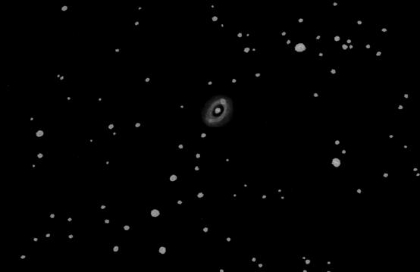
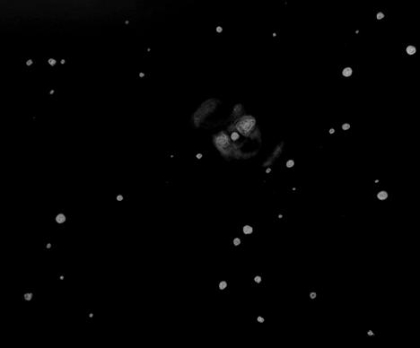
The two planetary nebulae NGC 2022 and NGC 22371/2372 are 're-visits' I have sketched both of these before but years ago with my old 350mm Newtonian and Watec camera, the level of detail is significantly higher in these new sketches.
ARP 186 was a challenge, especially seeing the slender trunk like projection/arm there are also another 3 small faint galaxies in the field, these I have not identified.
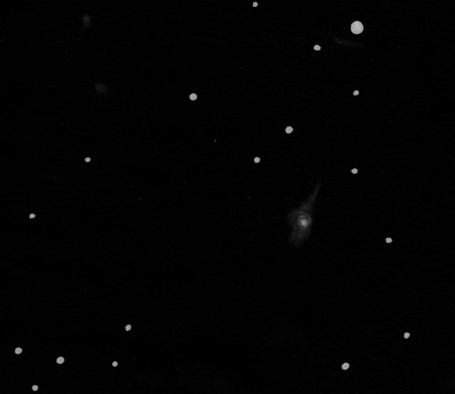
Some nice detail can be seen in NGC 1924 a rare Orion galaxy and a first observation for me, note also a faint unidentified galaxy to the upper right of my sketch and what appeared to be another spiral directly below the main galaxy, again unidentified.
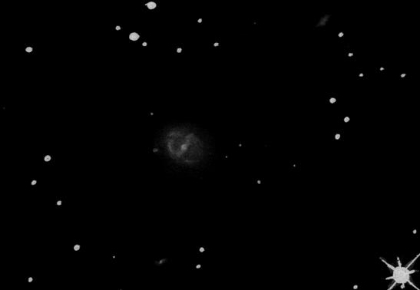
NGC 1964 in Lepus was disappointing until I went out into the observatory and saw just how low the scope was pointing into the murky glow in London's direction!
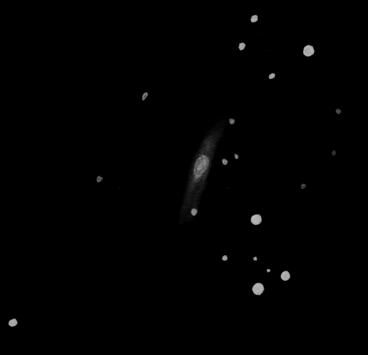
Finally a first visit for me to a lovely galaxy trio in Gemini, another constellation not normally associated with galaxy hauls.The largest spiral which I believe is NGC 2389? shows some great detail.
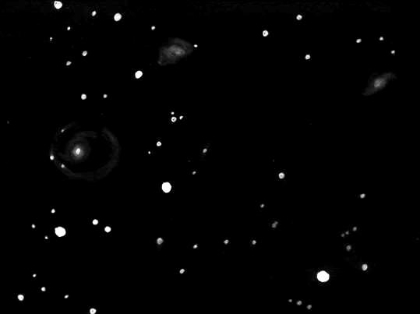
Dale Holt - (8 January 2016).
-
NGC 2371 / NGC 2372 in Gemini
I was delighted to see some more detail recently in this lovely and very interesting planetary nebula, which I will recount to you. At long last the poor weather relented and I managed to use my telescope for what turned out to be almost an 'all nighter'.
Tuesday 08 December 2015 was forecast to be clear well in advance and so many local astronomers got out to enjoy the night sky. I turned my 600mm f4.5 dobsonian onto a good range of objects including this Planetary Nebula (PN) in Gemini, sometimes called The Peanut because it is bi-polar, hence the reason why it was given two NGC names. Conditions were not particular good; the darkness was only SQM 20.79 which is very poor for this site, but transparency was average to good. Seeing was poor.
I spent thirty minutes studying this interesting planetary, starting at 01:35 UT early on Wednesday morning (night of 08/09). With a magnification of x 340 (Ethos 8mm) and then x570 (Ethos 4.7mm), the overall shape was of a pear drop. For once, the nick name peanut is accurate. Of the two brightest patches the Southern end was slightly brighter and smaller. The opposite end, Northern, was broader forming the wider base of the pear drop, with some much fainter nebulosity extending Westward. Fainter nebulosity filled the space between them with a slightly brighter band joining the two lobes on the Eastern edge. I then tried adding a UHC filter to the 8mm Ethos. Almost immediately I thought I could see some additional nebulosity outside the 'normal' planetary. After some minutes I was sure I could see very faint but definite curved bands on the West and East sides of the main body, with a clear gap between the 'pear' and the bands. They appeared to follow the curve of the planetary as if forming parts of a shell. The East section was larger - longer and wider at the South end with a much wider section going Eastwards. The West section also had a 'T' piece at the South end but much smaller. These shells were very faint and required AV2 to see (averted vision, but is held steady). I also noticed that the band joining the two parts of the bi polar planetary was very slightly brighter in the middle. The central star was prominent throughout.
I made a couple of sketches and the enclosed one illustrates, as best I can because I am not an artist of any sort, the view at x340 with the UHC filter. The outer shells are more prominent in the sketch than I saw them.
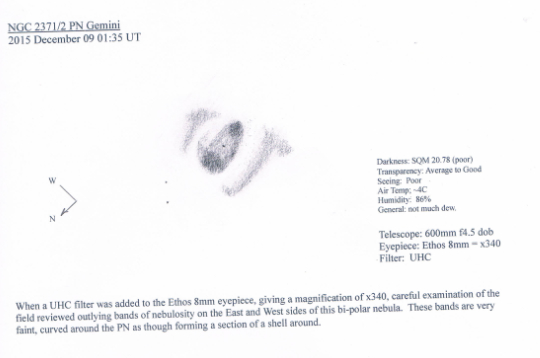
I have looked at this planetary many times over the years with various instruments but I have never seen the outer shells before now, and neither did I know of their existence. The following day I checked my usual (printed) sources and none mentioned this feature. However, an internet search revealed a DSS image of the the shells in exactly these positions.

Image Credit: Digital Sky Survey (DSS).
Pleased! It was a great night and I also enjoyed another great planetary and five Hickson Groups including Copeland Septet. Roll on the next clear skies.
David Reynolds (16 December 2015).

